Author Archives: Jake Mericle

NYC Rent Stabilization is Safe, For Now

U.S Supreme Court declines to hear rent stabilization cases

Source: Politico

On February 20, the Supreme Court denied requests to hear the appeals of two cases relating to New York City’s Rent Stabilization Law (RSL). The two cases came from trade organizations and the owners of apartment buildings in New York City, who believe the RSL is an unconstitutional taking of their land. The request, known as a writ of certiorari, was initiated after the U.S. Court of Appeals for the Second Circuit rejected arguments made against the RSL. The landlords in Community Housing Improvement Program v. New York City argue that the RSL is facially unconstitutional (that the law is unconstitutional in all possible applications).The landlords in 74 Pinehurst LLC v. New York allege the same but further argue that the RSL is unconstitutional as it applies to them (meaning that even if there are valid applications of the law, using it against these landlords is not valid). The Court of Appeals rejected these arguments in February 2023 and the landlords appealed to the Supreme Court in May 2023. 

These cases were brought as a result of 2019 amendments made by the New York State Legislature to enhance protections for renters. These updates to the law include limiting property owners’ ability to raise rents to cover individual apartment improvements, capital improvements, or to make up for years where they raised rents below the legally allowable maximum. The amendments also removed pathways that landlords could use to “deregulate” rent-stabilized units and begin charging market rate rents, such as when rents reached a certain threshold or when the unit is occupied by someone making over $250,000 a year. As a result, the property values of rent-stabilized buildings fell and building owners decreased their investments and spending on upgrades in rent-stabilized buildings. Additionally, of the nearly one million rent-stabilized units in New York City, nearly 10 percent are vacant and about half of those are deemed “unavailable.” Landlords and trade organizations then brought the lawsuits involved in these cases, arguing that these changes constitute a taking of their property rights. 

In its decisions released last year, the Second Circuit rejected these arguments following similar dismissals by the respective district courts. The Appeals Court reasoned that the RSL as amended does not constitute a taking because “States ‘have broad power to regulate housing conditions in general and the landlord-tenant relationship in particular.’” It went on to say that landlords are not without other ways of controlling their property, such as other pathways to evict tenants, and, even if they cannot decide who occupies the space due to successorship provisions, that does not cause a physical taking of property. The landlords then appealed to the United States Supreme Court.

The Supreme Court ultimately decided not to hear the cases. The Court does not usually explain why it refuses to hear cases, as was the case here. However, Justice Clarence Thomas issued a statement respecting the denials. In his statement, Justice Thomas explains that the landlords’ claims are based on generalized allegations that would complicate the review of their cases. He goes on to say that their claims do not easily enable the court to clearly understand how New York City regulations work together to bar landlords from evicting tenants as the landlords claim. However, Justice Thomas ends his statement by saying “in an appropriate future case, we should grant certiorari to address this important question.” Thus, Justice Thomas is leaving the door open on this issue and inviting other landlords without the issues he identified to try again, hinting that they may have a better chance. 

While it is unclear if any other Justices on the Court agree with Thomas, his posturing is concerning for advocates of rent stabilization given how the 6 to 3 conservative court has been using its power in recent years. From overturning decades-long precedent to allow states to ban abortions, to expanding the meaning of the Second Amendment to limit how states can respond to mass shootings, and to allowing businesses to turn away gay couples seeking services in public accommodations, this court is changing the social and political fabric of the United States. Time will tell if this court will receive a rent stabilization case again soon and what it will say, but whenever that is and whatever it says will impact millions of people who rely on the RSL to live affordably in New York City.

You can reach the author of this piece, Jake Mericle, at: jm9776@nyu.edu 

You can reach the editor of this piece, Calley Wang, at: csw9856@nyu.edu
The Federal Rail Strike, Explained

The short term economy is saved, but at what cost?

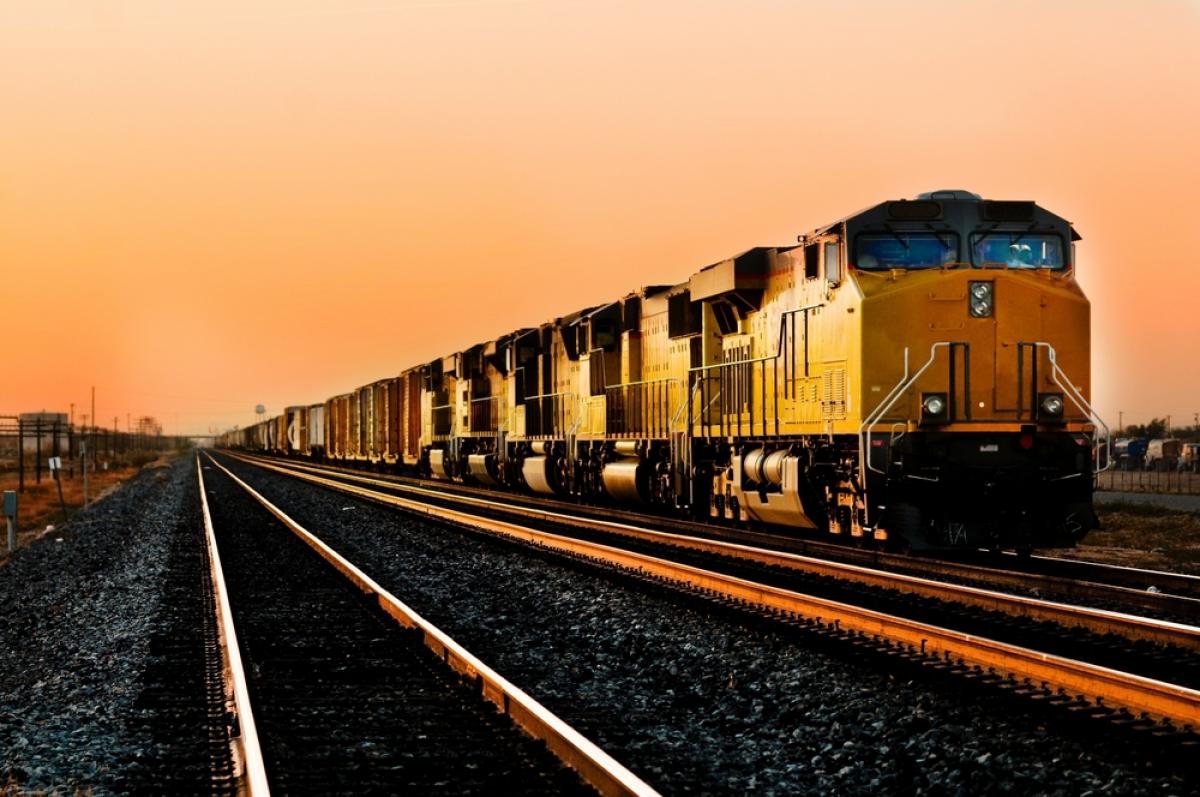
Freight Train approaches on track at sunset

Alaska Railroad

Over the past few months, rail workers in the United States have threatened to strike . A strike would cost the U.S. economy an estimated $2 billion a day, according to the Association of American Railroads. On December 1st, Congress ultimately averted the threat by forcing rail workers to accept a contract negotiated by the Biden Administration – a contract that union representatives had previously rejected. The new  deal fails to change the conditions – namely that workers do not have any paid sick days and they are still subjected to on-call scheduling –  that lead to the strike threat in the first place. The current regime is broken beyond repair. It’s time to nationalize the railroads.

Profits Over People

Freight rail plays a major role in the supply chain of U.S. goods and services. About one third of all freight in the United States travels by rail. As of 2019, freight rail had a profit margin of 51 %, making it the most profitable industry in the United States,  higher than the profit margins of the real estate and tobacco industries. In 2021, the top seven freight rail companies  had a combined net income of $27 billion

The unbelievable profit of rail freight companies is driven by a system known as precision scheduled railroads (P.S.R).  Created by E. Hunter Harrison in the 1990s the system sought to improve efficiency in the railroad industry – instead of going from terminal to terminal on multiple different trains, cargo would go directly from origin to destination – hopefully creating more consistent schedules for train crews. But P.S.R didn’t work.

Since the implementation of P.S.R. in the 1990’s, average freight train length has also grown with the goal to increase efficiency. From 2008 to 2017, the average length of freight trains rose by 25%. Some trains can be up to 3 miles long. The problem is that the rail companies only schedule two crew members to operate these long trains so small problems can lead to big delays. Additionally, over the past six years the major railroads have reduced their workforce by 30 percent. Increasing train length to reduce trips and reducing workforce have been done in the name of efficiency, but that efficiency is not seen in practice. The problem for shippers is that four companies control 83% of the freight market and, despite being two years post initial COVID disruptions, there is still widespread dissatisfaction among freight shippers with the service provided. 

Unpredictable schedules are a nightmare for workers. Crew members remain on-call and are called in to replace their fellow crew members at odd hours of the night with less than two hours notice. If a worker happens to be sick, they are punished for calling out, because they are not given any paid sick days (unlike 80% of U.S. workers). Rail workers are also subjected to a points-based attendance policy that can be used to start disciplinary action against the employee. Under this system, workers only have 30 points for a 90-day period but could lose up to 8 points for a sick day and 10 points for refusing an assignment for any other reason. One five-day illness, for example, could trigger discipline.

For decades, rail freight companies in the U.S. have been putting their own profits over the people who work for them and the people and companies that they serve. And the government has allowed them to.

Government Failure

Since governmental and political leaders learned of a looming strike in the rail industry, there have been various interventions by officials in the federal government. In September, the Biden Administration announced that it helped negotiate a deal between the rail companies and the unions that would avoid a strike. The deal would give rail workers a 24% pay rise, annual bonuses of $1,000, one paid personal day, a freeze on healthcare costs and a promise to end penalties for time missed due to health emergencies. 

Four of the twelve rail workers unions rejected the deal, in large part because it failed to give them the paid sick time they demanded. With a strike still looming at the beginning of December, President Biden called on Congress to intervene. Congress  negotiated a deal to give rail workers seven days of paid sick leave, but the motion failed to reach the necessary 60 votes in the Senate. 

President Biden and House Speaker Pelosi made clear that they were still in support of unions. Yet the President and Congress chose to force a contract that the workers did not want and that benefited the companies more than the laborers because, while the companies are giving a 24% pay rise to their employees, that is a small amount compared to their overall profits. Meanwhile, the employees still do not have paid sick leave and there has been no change in the way the companies operate their trains, which will force the workers to remain in the on-call system. But we should not be surprised: the government has long favored the rail companies over any other user of the rails. For instance,  when Amtrak was established in 1979, Congress required that freight companies give preference to passenger trains, thus allowing for limited disruptions to passenger rail. However, only the Department of Justice can enforce that law and, in the last 40 years, they have only enforced it one time. 

The government has failed to protect rail workers, passengers, and anyone who isn’t the top freight companies. Something has to change.

Ripe for Nationalization

Currently rail companies own the tracks on which they operate, a virtual monopoly. The private rail companies have shown that they care more about investor’s portfolios than the workers they employ and the customers they serve. The government, while recognizing the damage a rail strike would do to the economy, caved to the companies’ demands and did not materially change the circumstances that led to the almost strike. We can change that by nationalizing the country’s rail infrastructure. 

Rail map of the united states showing track ownership in different colors

American Association of Railroads

Public ownership of the rails would allow any company to operate on them, increasing competition between the companies and improving service for consumers. Furthermore, when any rail company can operate on any rail line, companies would also have to compete for workers because rail workers would no longer have to choose between moving across the country to a company they prefer or be limited to the companies that are near them. As a result, the companies will have to offer competitive pay and benefits to attract the talent they desire. 

Nationalizing the rails is not unprecedented: President Wilson did so during World War One. That led to substantial public investment in building the rail system, from federal land grants to $1billion in infrastructure improvements. Nationalization would recognize the national importance of rail infrastructure, similar to the interstate highway system. 

Whether the rail workers still choose to strike or not, it is clear that this threat will not go away without a serious overhaul of the rail industry.

You can reach the author of this piece, Jake Mericle, at: jm9776@nyu.edu 

You can reach the editor of this piece, Patrick Spauster, at: ps4375@nyu.edu