• Skip to main content
  • Skip to primary sidebar
  • Skip to footer

Borderlands

kristi noem

Sanctuary City L.A.: Investigation- ICE Raid Leak

February 10, 2025 by James L'Angelle Leave a Comment

Los Angeles Dodgers - LA Dodgers logo in Black & Blue Die-cut MAGNET | eBayIntroduction

     Border wars aren’t necessarily about geographical territorial disputes. In the wake of the takeover of the Hollywood Freeway in Los Angeles on Groundhog Day by an unruly mob of protesters waving foreign flags, the backlash at the DHS was to place Los Angeles at the top of the list for a sweep of undocumented civilians residing in the United States illegally.

     The L.A. Times was alleged to have gotten hold of some “internal memos” about the plan, but there has yet to be confirmation the information is genuine. Just about anyone with an attitude, or perhaps a threatened job in the government, could use artificial intelligence (AI) or just dream up a scenario using available resources and data. The last outlet to be trusted is the media, with a history of fabricating information

Methodology

     The investigation follows the format of other recent posts: a.) “X” social media post where applicable, b.) Capsules with search queries from AI embedded in parentheses (Begin Perplexity-AI) and (End Perplexity-AI), with Notes at indicated points to clarify, expand, refute or confirm the AI queries, c.) Media to corroborate the information found in the search queries. It isn’t necessarily evidence but will be added for context.

Capsules

(Begin Perplexity-AI)

leaked los angeles ice raids leaks fbi dhs

A “large scale” immigration raid is planned to occur in Los Angeles before the end of February, according to an internal government document leaked to the LA Times13. The operation will be led by U.S. Immigration and Customs Enforcement (ICE) and will focus on individuals without legal status in the U.S. or those with pending removal orders13.The leak has sparked controversy, with Department of Homeland Security (DHS) Secretary Kristi Noem accusing the FBI of corruption and leaking the plans2. Noem stated, “The FBI is so corrupt. We will work with any and every agency to stop leaks and prosecute these crooked deep state agents to the fullest extent of the law”25.Key points about the leaked information and subsequent reactions:

  1. The operation involves multiple agencies, including ICE, FBI, and DEA13.
  2. Los Angeles County is home to over 800,000 undocumented residents1.
  3. The leak has raised concerns about operational security and the potential impact on the raid’s effectiveness5.
  4. Border czar Tom Homan suggested that media leaks have hindered previous operations, such as a recent raid in Denver5.
  5. The DHS has issued directives expanding law enforcement capabilities and ending what they call the “abuse of humanitarian parole”7.

The leak and subsequent accusations have heightened tensions between federal agencies and raised questions about the effectiveness of large-scale immigration enforcement actions in sanctuary cities like Los Angeles68

https://www.perplexity.ai/search/leaked-los-angeles-ice-raids-l-E.oZ0a6GTcS938Pj4oCbcg

la times fabricated sensationalist story about february ice raids in los angeles

The claim that the LA Times fabricated a sensationalist story about February ICE raids in Los Angeles is not supported by the available information. Multiple reputable sources have reported on the planned immigration enforcement action:

  1. The LA Times reviewed an internal government document detailing plans for a “large scale” immigration enforcement action in Los Angeles before the end of February2.
  2. Other news outlets, including Fox LA and Pasadena Now, have corroborated the story, citing the LA Times report and providing additional details15.
  3. The operation is reportedly led by U.S. Immigration and Customs Enforcement (ICE) and will focus on individuals without legal status or with pending removal orders12.
  4. Federal law enforcement sources, speaking anonymously, confirmed that FBI and DEA agents are being called in to assist with the operation12.
  5. The Department of Homeland Security Secretary Kristi Noem publicly commented on the leaked information, accusing the FBI of corruption and leaking the plans1.

Given the multiple sources reporting on this planned action and the public response from a high-ranking government official, it is unlikely that the LA Times fabricated the story. The report appears to be based on legitimate sources and documents, and has been independently verified by other news organizations.

la times fabricated sensationalist story about february ice raids in los angeles

(End Perplexity-AI)

Notes: 

#4.) “Federal law enforcement sources, speaking anonymously,” is exactly the roadmap that indicates the information is dubious. In addition, artificial intel states “based on the available information,” and not evidence.

Media has a tool it can use to assist in spreading false and misleading statements, along with the standard anonymous sources catchall. The public has been brainwashed by this dodge for so long, no one bothers to question it anymore. In #5, the fact that “Secretary Kristi Noem publicly commented on the leaked information,” is totally meaningless, using it as a.) an opportunity to speculate and enforce the false narrative, and b.) is inexperienced at the interplay between media-government suspicion and rivalry.

(Begin Perplexity-AI)

los angeles county undocumented demographics by city

Based on the available search results, there is no specific information about undocumented demographics by city within Los Angeles County. However, I can provide you with some relevant information about undocumented immigrants in Los Angeles County as a whole:As of 2022, an estimated 951,000 undocumented immigrants resided in Los Angeles County, representing about 9% of the county’s total population1. This makes Los Angeles County the U.S. county with the highest concentration of undocumented immigrants.The undocumented immigrant population in Los Angeles County is primarily from Latin America, with the top countries of origin being:

  1. Mexico: 501,000 (53% of undocumented immigrants)
  2. El Salvador: 112,000 (12%)
  3. Guatemala: 108,000 (11%)
  4. Philippines: 48,000 (5%)
  5. China: 42,000 (4%)1

In terms of regional distribution within the county, the Migration Policy Institute estimated that in 2016, the undocumented immigrant population was most concentrated in Southeast Los Angeles County, Eastern San Fernando Valley, and the San Gabriel Valley1.Other demographic insights include:

  • 79% of undocumented immigrants in Los Angeles County are from Mexico and Central America
  • 16% are from Asia
  • 62% have resided in the U.S. for 10 years or more
  • 30% of undocumented immigrants age 15 and older reside with at least one U.S.-citizen child under 181

While city-specific data is not available, this information provides a general overview of the undocumented immigrant population in Los Angeles County.

https://www.perplexity.ai/search/los-angeles-county-undocumente-PLKndk2RTOKY.AiNaRjUqw
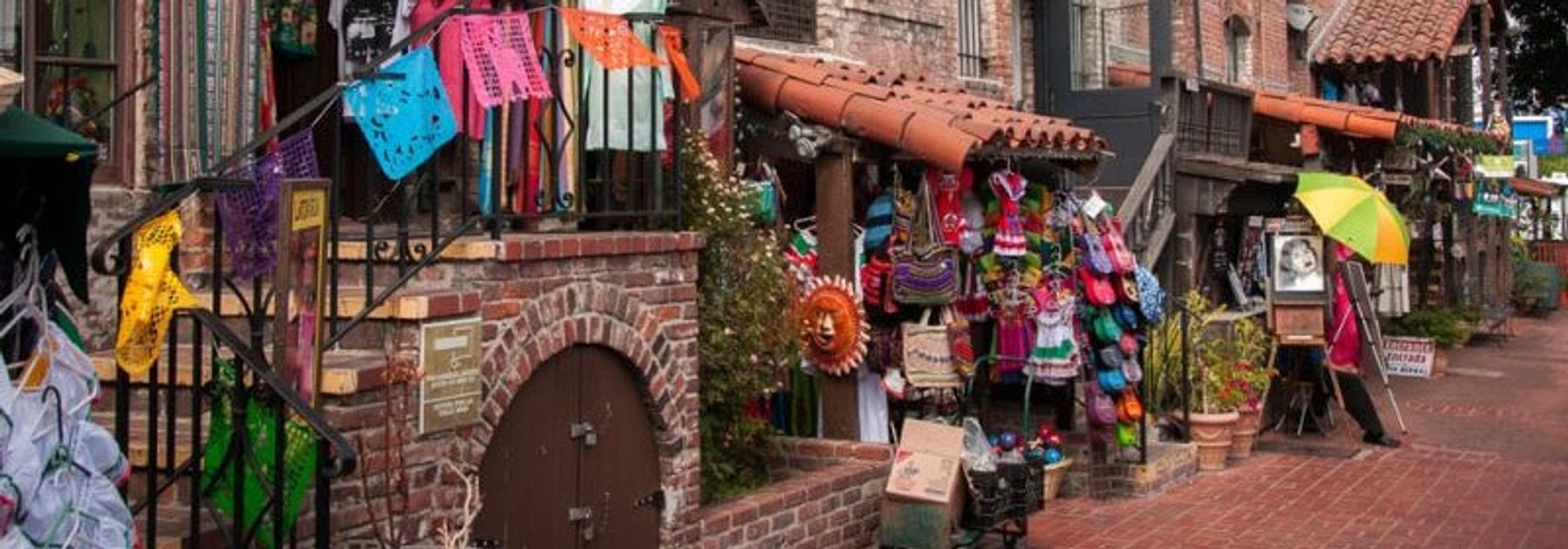
Olvera Street | Downtown LA

little mexico in los angeles

“Little Mexico” in Los Angeles typically refers to Olvera Street, a historic pedestrian street located in the oldest part of downtown Los Angeles. Olvera Street, also known as Calle Olvera in Spanish, is a colorful Mexican marketplace that recreates a romantic “Old Los Angeles” atmosphere12.The street features:

  • 27 historic buildings with a traditional Mexican-style plaza area1
  • A marketplace with vendors selling handcrafted Mexican wares, pottery, and folk art2
  • Outdoor cafes and restaurants serving authentic Mexican cuisine, including popular taquitos and tacos12
  • Street performers, including mariachi musicians, Aztec dancers, and folkloric performances1

Olvera Street attracts nearly two million visitors annually and is often referred to as “the birthplace of Los Angeles”23. It was created in 1930 to preserve and present the customs and trades of early California, and many of the current merchants are descendants of the original vendors2.The area is part of El Pueblo de Los Angeles Historical Monument, which commemorates the founding of Los Angeles in 1781 by 44 settlers of Native American, African, and European heritage4. Today, it serves as a living museum, offering visitors a glimpse into the city’s rich cultural heritage and early history.While Olvera Street is the most well-known “Little Mexico” in Los Angeles, there are other areas and establishments that offer Mexican cuisine and culture throughout the city, such as East Los Angeles, which has a significant Mexican-American population and numerous Mexican restaurants and businesses68

https://www.perplexity.ai/search/little-mexico-in-los-angeles-bHKq7AzaTd6V42TtGGEzHg

(Image Credit: Olvera Street | Downtown LA)

how did la times get information on ice raids in los angeles

The LA Times obtained information about the planned ICE raids in Los Angeles through leaked internal government documents12. These documents were reviewed by LA Times reporters and circulated among some federal law enforcement officials3. Additionally, the newspaper received information from anonymous federal law enforcement sources who spoke on condition of anonymity due to fear of reprisals23. These sources provided details about the planned “large scale” immigration enforcement action, including the involvement of other agencies like the FBI and DEA in assisting ICE12.

https://www.perplexity.ai/search/how-did-la-times-get-informati-g6Z50xBSRw.o9Y5lnr1lVA

(End Perplexity-AI)

Notes:

     Naturally, the area most likely to be targeted would be the one with the greatest density of undocumented civilians, with a focus on those engaged in criminal activity: trafficking, drugs, protection. The percentages of those without proper credentials per demographics is difficult to determine, but by experience, it would make sense there are enough informants in the population to assist in the combined efforts of ICE/DEA/ATF/FBI and local cops to make a convincing sweep to instill terror in the communities to clean up their acts.

     In fact, to what degree these preliminary raids will have any effect on the community to get it together may well be based more on psychology than practicality, since it appears the DHS has just called up the IRS for reinforcements to swell the ranks for boots on the ground to assist.

Media

Los Angeles Almanac

Los Angeles County

DHS has not offered undocumented immigrant estimates specifically for U.S. counties. The Migration Policy Institute, however, estimated the number in 2019, specifically in Los Angeles County, to have been 951,000 (see table below), almost 10 percent of the county’s entire population and the highest concentration in any U.S. county. The undocumented immigrant populations combined in the five boroughs (counties) of New York City were estimated to be 600,000. In Harris County, Texas (Houston), the number was 481,000; in Dallas County, Texas (Dallas), 293,000; in Cook County, Illinois (Chicago), 257,000; in Miami Dade-Monroe Counties, Florida (Miami), 198,000.

The Migration Policy Institute estimated that, in 2016, the undocumented immigrant population in Los Angeles County was most concentrated in Southeast Los Angeles County, Eastern San Fernando Valley and the San Gabriel Valley. The University of Southern California Center for the Study of Immigrant Integration reported that, in Los Angeles County, in 2016, 80 percent of undocumented persons were Latino, 10 percent were Asian or Pacific Islander, and 3 percent were white. It further reported that 68 percent of undocumented immigrants had lived in the United States for more than 10 years and that 852,000 U.S. citizen Angelenos and 273,000 legal permanent resident Angelenos lived with an undocumented family member. Combined with an estimated 886,000 Angelenos who were undocumented, that came to about 1 in 5 residents of Los Angeles County who were either undocumented or living with a family member who was undocumented.

Undocumented Immigrants in California and Los Angeles County

Migration Policy Institute:

Profile of the Unauthorized Population: Los Angeles County, CA

County Data (6037): Unauthorized Population | migrationpolicy.org

Capsule

(Begin Perplexity-AI)

hypothetical scenario of dhs illegal alien sweep in los angeles

Based on the search results, a hypothetical scenario of a DHS illegal alien sweep in Los Angeles could unfold as follows:Federal law enforcement agents, primarily from U.S. Immigration and Customs Enforcement (ICE), would conduct a large-scale immigration enforcement action in the Los Angeles area1. The operation would focus on individuals without legal status or those with pending removal orders1.The sweep would likely involve:

  1. Collaboration between agencies: ICE would be assisted by other federal agencies such as the FBI, DEA, and ATF12.
  2. Targeted arrests: Agents would prioritize individuals with criminal convictions, including those convicted of serious crimes like rape, drug trafficking, and sex offenses3.
  3. Wide geographic coverage: The operation would span multiple neighborhoods in Los Angeles and potentially extend to nearby cities like Pasadena, El Segundo, and Inglewood4.
  4. Workplace enforcement: Agents might conduct raids at businesses suspected of employing undocumented workers2.
  5. Use of databases: ICE would likely utilize DHS databases to identify and locate targets13.
  6. Potential resistance: The operation could face pushback from local authorities, given Los Angeles’ status as a sanctuary city7.
  7. Media attention: The sweep would likely generate significant media coverage and public reaction, potentially leading to protests1.

It’s important to note that such operations are controversial and can cause fear and anxiety in immigrant communities4. Additionally, DHS has stated that it does not conduct immigration enforcement activities during major emergencies or in protected areas4.

https://www.perplexity.ai/search/hypothetical-scenario-of-dhs-i-GxDEk1iKRNKlG4E8FEzH6Q

(End Perplexity-AI)

Notes

     Creating any number of scenarios for the purpose of sensationalizing an already explosive issue is not what the media should be about, unfortunately it is. Lacking any ability in the face of a myriad forms of new information sources due to social media, competition in the media industry has expanded beyond the original horizon in which it had a monopoly. Now it has to deal with the so-called “citizen journalist;” most of them are dilettantes, but the media, such as the Los Angeles Times, can’t afford to take any chances. It has to take a page from the World Series champs from its own city, play hardball.

Afterward

     Border wars aren’t about contiguous territory, they’re about interagency rivalry, they’re about lassoing the media to learn to keep its mouth shut, whether the information is evidence based or not. They’re about the reaction from the public when a hint is dropped about an upcoming radical move to roust the community, as in the recent takeover of the Hollywood Freeway. Most importantly, they are about trust, with the new DHS secretary criticizing the role of another agency and the overall perspective the public has in its own government. 
Filed Under: anthropology, baseball, department of homeland security, immigration, immigration and customs enforcement, los angeles, los angeles times, sanctuary city Tagged With: anthropology, baseball, dhs, ice raids, immigration, kristi noem, los angelkes times

Guantanamo Bay: Operation Sea Signal, 1994

February 2, 2025 by James L'Angelle Leave a Comment

Introduction

     The Clinton administration was faced with an influx of refugees from two primary locations, Haiti and Cuba. Thousands were detained in separate camps at the naval station on the southeastern tip of Cuba, at Guantanamo Bay. Tagged Operation Sea Signal, the migrants made their escape from treachery and upheaval in anything that would float and earned the prestigious title of boat people. They were sequestered at Guantanamo. Below is a review of the interdiction of the migrants out on the Florida Straits, circumstances and displacement of the refugees throughout the navy base into various camps, separated by nationality.

Methodology

     The process includes individual capsules, each containing a.) an “X” social media post by @jameslangeele if applicable, followed by b.) an artificial intelligence query, enclosed in (Begin Perplexity-AI) and (End Perplexity-AI) containing the link to the query, and c.) Notes to clarify, add context, fact check the AI query. Where possible, since AI does not extract information from archived newspapers, these will be added, such as maps, images and decoded optical character recognition (OCR) texts.

Capsules

interdiction

“X” post by @jameslangelle

Guantanamo R&R 02/02/25/1330PST: Interdiction, migrant camp crisis, 1994, $xM, 10K+ boat people sequestered, individual camps, #Cuba, Haiti refugees. Rf. CINC memo #DHS Kristi Noem, #ICE Tom Homan, SecDef Hegseth. (Miami Herald, 01/09/94/20A)

(Begin Perplexity-AI)

coast guard interdiction, boat people, 1994

cgaviationhistory.org

In 1994, the U.S. Coast Guard conducted its largest operation since the Vietnam War, responding to mass migrations from Haiti and Cuba1. This operation, known as Operation ABLE MANNER (for Haiti) and Operation ABLE VIGIL (for Cuba), resulted in the rescue and interdiction of over 63,000 migrants attempting to illegally enter the United States13.Operation ABLE MANNER began in January 1993, focusing on interdicting Haitian migrants in the Windward Passage between Haiti and Cuba1. The operation involved 17 Coast Guard cutters, nine aircraft, and five U.S. Naval ships1.Operation ABLE VIGIL was launched in response to a surge in Cuban migration that began in August 19941. This exodus was triggered by Fidel Castro’s announcement that Cuba would not prevent people from leaving the island23. The operation involved 29 Coast Guard cutters, six aircraft, and nine U.S. Naval ships patrolling the Straits of Florida1.

Key aspects of the 1994 interdiction efforts:

  1. Scale: At its peak, the combined operations involved over 50 ships and numerous aircraft14.
  2. Humanitarian crisis: Many migrants attempted the journey on makeshift rafts and boats, often lacking sufficient food and water2. The Coast Guard’s efforts were as much humanitarian as they were law enforcement5.
  3. Processing: Interdicted migrants were initially taken to Guantanamo Bay Naval Base for processing23. Over 50,000 refugees were processed as part of Operation Sea Signal2.
  4. Policy change: On August 19, 1994, President Clinton announced that interdicted Cubans would no longer be brought to the United States but would be held at Guantanamo Bay6. This marked a significant shift in U.S. policy towards Cuban migrants.
  5. Long-term impact: These events led to the implementation of the “Wet Feet, Dry Feet” policy for Cuban migrants and set a precedent for future Coast Guard migrant interdiction operations24.

The 1994 interdiction efforts demonstrated the Coast Guard’s crucial role in managing mass migration events and highlighted the complex humanitarian and political challenges associated with such crises4.

https://www.perplexity.ai/search/coast-guard-interdiction-boat-RsrVhlNwTzK.bN.UWhKGnQ

(End Perplexity-AI)

Notes:

By today’s standards for the transport and housing of undocumented civilians who have entered the United States without proper clearance, the boat people phenomenon was a scale clearly difficult to comprehend, even with similar efforts today. Those include Libyan asylum seekers, only they have to cross the Mediterranean, not the short hop to the Keys from Cuba.

sea signal

“X” post @jameslangelle

(no post available for this capsule).

(Begin Perplexity-AI)

operation sea signal construction, guantanamo, 1994

Operation Sea Signal, launched in May 1994, required rapid construction of refugee camps at Guantanamo Bay Naval Base to accommodate a large influx of Cuban and Haitian migrants13. The construction efforts were significant and challenging:

Camp Construction

  • Tent cities were quickly erected across the windward side of the base, including Camp Alpha, Camp Bravo, Camp Golf, and Camp X-Ray1.
  • The base golf course and McCalla airfield were repurposed as refugee holding camps1.
  • Camps were constructed and filled to capacity within days4.

Infrastructure

  • Fences were built using concertina wire covered in netting, surrounded by portable light generators1.
  • Navy Seabees constructed concrete shower facilities within the camps1.
  • Portable restrooms were placed throughout the camp areas1.

Challenges

  • High heat conditions, water shortages, and large amounts of trash posed significant challenges1.
  • The base’s isolated location required all supplies to be shipped by sea and air2.
  • Potable water was produced by a desalination plant2.

Scale and Speed

  • By August 1994, construction efforts expanded to prepare for housing up to 60,000 Cubans, in addition to the 15,000 Haitians already present5.
  • The rapid buildup of military infrastructure was described as a “major feat”2.

The construction efforts were crucial in transforming Guantanamo to handle the massive influx of refugees, costing approximately $1 million per day4. The operation’s success heavily relied on the quick and efficient establishment of these temporary living quarters.

https://www.perplexity.ai/search/operation-sea-signal-construct-Hh7BKCg3RkqB0kvxTOa7AQ

(End Perplexity-AI)

Notes:

“Sea Signal was an expensive operation. The Joint Staff estimated incremental military costs in fiscal years 1994 and 1995 to be approximately $373 million. A September 1995 GAO estimate of the costs of all agencies associated with the Cuban migration alone was approximately $497 million. Total costs from May 1994 until the operation terminated in February 1996, for all agencies of the U.S. Government and for both the Haitian and Cuban governments, easily exceeded a half billion dollars.” (Operation Sea Signal: U.S. Military Support for Caribbean Migration Emergencies, May 1994 to February 1996)

migrant camps

“X” post by @jameslangelle

Guantanamo Bay R&R 02/02/25/1145PST: Map below (Miami Herald, 12 Sept. 1994, p.9A) dispersion of migrants across the base, slated to be #DHS zone confirmed by Sec. Kristi Noem (currently on horse in Texas), #ICE Tom Homan, SecDef Hegseth per CINC memorandum. (c) 2025 CyBot Media


(Begin Perplexity-AI)

separate migrant camps, guantanamo bay, 1994

In 1994, Guantanamo Bay Naval Base became a temporary home for thousands of Cuban and Haitian migrants as part of Operation Sea Signal, which lasted from May 1994 to February 19963. The operation was a response to a mass exodus of people fleeing their countries and seeking asylum in the United States.The migrants were housed in separate camps within Guantanamo Bay for various reasons:

  1. Nationality: Cuban and Haitian migrants were kept in separate camps7.
  2. Family status: There were specific camps for:
    • Intact families
    • Single men
    • Unaccompanied minors7
  3. Behavior: Camp X-Ray was used to house migrants who committed crimes or seriously endangered the safety of others1.
  4. Gender: While there weren’t enough single women to fill an entire camp, separate tents were set aside for them within the camps3.

The living conditions in these camps were challenging but considered adequate by observers8. The camps evolved over time, with improvements made to accommodate the large influx of migrants:

  • Initially, U.S. Humanitarian rations were distributed as main meals.
  • Later, military-style chow halls were added to the camps3.
  • Recreational activities, such as soccer matches, were organized within the camps3.

At its peak, Guantanamo Bay housed approximately 50,000 migrants, with only 8,000 U.S. military personnel to manage the crisis13. The operation faced challenges, including riots and tensions between different groups of migrants6, but ultimately played a crucial role in providing temporary shelter and processing for these asylum seekers during a critical period in 1994-1996.

https://www.perplexity.ai/search/separate-migrant-camps-guantan-h1DQa_1qRO.i.kVxZN8qzg

(End Perplexity-AI)

Notes: 

The monumental task to house and care for the unfortunate migrants who risked unimaginable danger crossing from their home island to the mainland reflects the similar task facing the government at this very moment.

“X” post by @jameslangelle

Guantanamo Bay R&R 02/02/25/1200PST: Below, an image mosaic of the separate migrant camps at the base in 1994, pursuant to new CINC order #DHS Kristi Noem (on horse, Texas border), #ICE Tom Homan (not on horse) SecDef Hegseth. (c) 2025 Borderlands Post.


https://perplexity.ai/search/separate-migrant-camps-guantan-h1DQa_1qRO.i.kVxZN8qzg

camp mccalla

“X” post by @jameslangelle

(no post available for this capsule)

(Begin Perplexity-AI)

camp mccalla, guantanamo, 1994

gitmomemory.org

Camp McCalla was one of several refugee camps established at the U.S. Naval Base Guantánamo Bay during Operation Sea Signal, which took place from May 1994 to February 19962. The camp was part of the U.S. military’s response to the influx of Cuban and Haitian migrants seeking asylum in the United States26.Camp McCalla primarily housed Haitian refugees. In July and August 1994, Haitian migrants were processed by ArFor 160 at this camp4. More than 14,000 Haitian refugees were accommodated in the Camp McCalla tent facilities7. The camp was located on the windward side of the base, along with other camps such as Camp Alpha, Camp Bravo, Camp Golf, and Camp X-Ray2.Living conditions in the camps, including Camp McCalla, were challenging:

  1. Refugees lived in tents and slept on military-issue cots2.
  2. The camp faced issues such as high heat, water shortages, and lack of proper restroom facilities2.
  3. Security measures included fences made of concertina wire covered in netting, surrounded by portable light generators2.

Camp McCalla was among the last camps to be closed during the operation. The residents of Camp McCalla were the last group of Cuban refugees to leave Guantánamo on January 31, 1996, marking the end of the 1994 rafter crisis1

https://www.perplexity.ai/search/camp-mccalla-guantanamo-1994-iU0EoQ.kSr6Mj0HeN.m6EQ

(End Perplexity-AI)

Notes: The Cubans were kept separate from the Cubans; unclear if a similar arrangement will be made for the current camp setup.

camp bulkeley

“X” post by @jameslangelle

(No post available for this capsule)

(Begin Perplexity-AI)

camp bulkeley, guantanamo, 1994

(Text clipping: Marilyn Garatiex, Escape tries still amaze Coast Guard, The Miami Herald, 12 Sept. 1994, page 9A)

In 1994, Camp Bulkeley at the United States Naval Station Guantanamo Bay played a significant role during the Haitian refugee crisis13. The camp, originally constructed between 1943-45 to house Marines, had been repurposed to accommodate Haitian refugees fleeing political turmoil in their home country1.During this period, Camp Bulkeley and other areas of the naval station were used to house thousands of Haitian and Cuban migrants4. The camp gained notoriety for its controversial use as a detention center for HIV-positive Haitian refugees3. Although the HIV camp had officially closed on July 18, 1993, following a legal battle and protests, Guantanamo was reopened less than a year later in June 1994 to hold refugees once again3.The conditions at Camp Bulkeley were described as challenging:

  1. The camp was situated on a windswept, barren stretch of ground overlooking the Caribbean2.
  2. It consisted of simple whitewashed buildings and concrete slabs designed for tents2.
  3. Each tent could accommodate 18-20 cots, offering little privacy to the occupants2.

American troops attempted to improve the spartan conditions at the tent city and Camp Bulkeley for the Haitian refugees7. Despite these efforts, the camp remained a symbol of the complex humanitarian and political issues surrounding the treatment of refugees at Guantanamo Bay.

(Text clipping: Marilyn Garatiex, Escape tries still amaze Coast Guard, The Miami Herald, 12 Sept. 1994, page 9A)

https://www.perplexity.ai/search/camp-bulkeley-guantanamo-1994-h2yBSLWpRHCVqEGgdoUIpg

(End Perplexity-AI)

Notes:

Op Sea Signal, 1994, boat people Macapagal Labarre, Haiti, in front of watercraft (Akron Beacon Journal, 04/07/94/a2)

Guantanamo Bay R&R 02/02/25/1300PST: Op Sea Signal, 1994, boat people Macapagal Labarre, Haiti, in front of watercraft (Akron Beacon Journal, 04/07/94/a2) Rf. CINC memo, #DHS Kristi Noem (not in boat, on horse, Texas), #ICE Tom Homan, SecDef Hegseth.


minefield

“X” post by @jameslangelle

Guantanamo Bay R&R: 02/02/25/1100PST: Presidential memorandum to #DHS Kristi Noem, #ICE Tom Homan, SecDef Hegseth forgets to mention the minefield, #Cuba, surrounding the base, where expat migrant kids might stray into to play. Rf.

(Begin Perplexity-AI)

guantanamo bay minefield

The Guantanamo Bay Naval Base, established in 1903, was surrounded by one of the largest minefields in the Western Hemisphere, second only in size globally2. In 1961, following the Cuban Missile Crisis, U.S. and Cuban troops laid approximately 55,000 anti-personnel and anti-tank mines around the base’s 17-mile perimeter12.The minefield posed significant dangers:

  1. Accidents occurred despite maps and warning signs. In 1964, five U.S. Navy sailors were killed when they wandered into a minefield at night5.
  2. Between 1961 and 1965, at least 10 people died from landmine explosions2.
  3. Several Cuban defectors lost their lives attempting to cross the minefield1.

The Minefield Maintenance (MFM) section, a unit of Marine Combat Engineers, was responsible for maintaining the minefields from 1961 to 20001. Their hazardous work involved locating, digging up, and replacing live explosives daily. Throughout the unit’s history, 13 engineers died working in the minefields1.In 1996, President Bill Clinton ordered the removal of mines on the U.S. side2. By early 2000, the entire base perimeter was certified mine-free, with the MFM section deactivated after nearly 40 years of service1. However, the Cuban government has not removed its corresponding minefield outside the perimeter2.In recent years, the area has faced new challenges. In 2018, a wildfire burned through the former minefield, causing several mines in Cuban territory to explode and forcing the evacuation of approximately 300 base residents3

https://www.perplexity.ai/search/guantanamo-bay-minefield-X.nF1IHORO.ShyvqmzXDYQ

(End Perplexity-AI)

Afterword

(Image credit: The Oregonian, 25 August 1994, p1.)

     Regardless of the tremendous effort witnessed in Operation Sea Signal to contain migration influx into the United States, the flow continues and has since the Clinton administration. It has become a seminal political topic in elections, and no one has really taken it seriously after winning. 

     Will the current political climate of the new administration have the wind taken out of its sails as it attempts to cross the Florida Straits of cost, public opinion, political rivalry, legal restrictions and jurisdiction, and the ever-growing threat of the new menace which was championed by the victors in the recent election, the citizen journalist, social media.

(Image credit: The Oregonian, 25 August 1994, p1.)

Filed Under: guantanamo bay, immigration, operation sea signal, united states coast guard Tagged With: detention facility, dhs, guantanamo bay, ice, illegal aliens, kristi noem, unlawful combatants, war on terror

Primary Sidebar

Footer

Copyright © 2025 · eleven40 Pro on Genesis Framework · WordPress · Log in