• Skip to main content
  • Skip to primary sidebar
  • Skip to footer

Borderlands

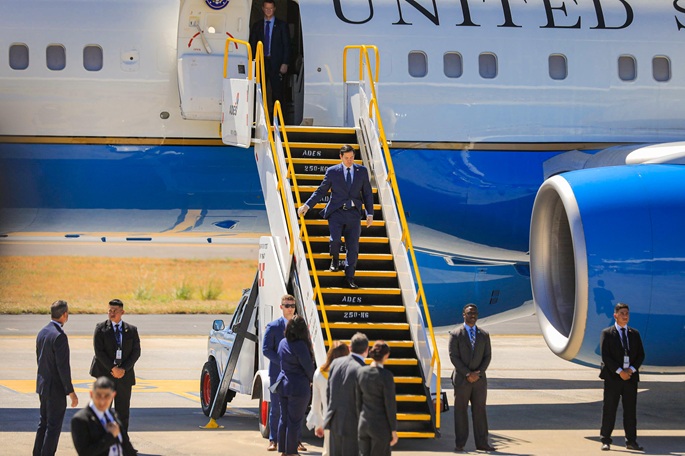
secretary of state marco rubio

Ukraine: The Crossroads of World Wars (One, Two, Three)

March 4, 2025 by James L'Angelle Leave a Comment


The Great Dictator | Plot, Cast, Summary, & Facts | Britannica)BORDERLANDS

V. 25, I. 03.04.25             

Introduction

     Peace deals, mineral deals, the threat of World War Three-just another week in the ongoing Eastern Europe war of words, beyond the battlefield. From the White House Oval Office in Washington, DC, to 10 Downing in London, the emperor with no clothes searches for new ways to keep the arms and money rolling in to the front lines, although they appear to be drying up. There’s also rumors he’s running out of soldiers, they are being handcuffed in the streets and sent to fight against the invader. Most of the last week of February 2025 is encapsulated in the social media post, synthetic intelligence (AI) combinations below.

 (Image credit: The Great Dictator | Plot, Cast, Summary, & Facts | Britannica)

Methodology

     The Capsules contain social media posts @jameslangelle, in italics, followed by the AI search query heading and a brief description of the results, along with the link to the query. Other headings include Media and Congressional Record, followed by Notes and an Afterword.

Capsules

(Begin Perplexity-AI)

#EU Fallout 02.28.25.1830pst: “Don’t tell us what we’re going to feel. You’re in no position to dictate that.” It works on European #NATO, not America; U.S. is not under #Ukraine martial law, an overt threat from emperor with no clothes (suit). Rf. #Russia

president tells zelensky don’t tell us how we are going to feel

On February 28, 2025, a heated exchange occurred between President Donald Trump, Vice President JD Vance, and Ukrainian President Volodymyr Zelensky in the Oval Office. The meeting, which was intended to discuss Ukraine’s future and sign an agreement, quickly escalated into a confrontational dialogue13.

https://www.perplexity.ai/search/president-tells-zelensky-don-t-SEVWp4RSQIagIOJ.JELNDg

#Ukraine Martial Law 02.28.25.1800pst: “these measures are seen as necessary,” only for dictators. The #EU and European #NATO, along with France #Macron and the UK, support a dictatorship, came into constitution 2015 in response to #Russia. Rf. #China.

why is ukraine martial law constitutional

Martial law in Ukraine is constitutional due to several key factors:

  1. Legal basis: The Constitution of Ukraine, along with the Law of Ukraine “On the Legal Status of Martial Law” (No. 389-VIII from May 12, 2015), provides the legal foundation for implementing martial law1.

  2. Constitutional provisions: The Ukrainian Constitution allows for specific restrictions on rights and freedoms during martial law, ensuring its compatibility with the country’s fundamental legal framework1.

  3. Parliamentary approval: President Zelensky’s decree to declare martial law in response to the Russian invasion was approved by the parliament, adhering to constitutional procedures2.

https://www.perplexity.ai/search/why-is-ukraine-martial-law-con-Vf.uFFotRT66vSqGjDl5rA

#Ukraine Prime Time 02.28.25.1530pst: “Great television,” says the President, Marine VP says visitor “disrespectful,” to manipulate American media, AI examines “Howard Hawks” style.  Attn: #NATO, WWIII imminent, #Russia and #China on full alert!

zelensky white house meeting all talking at once, like a howard hawks movie

The recent meeting between President Volodymyr Zelenskyy and President Donald Trump at the White House shares some parallels with the fast-paced, overlapping dialogue characteristic of Howard Hawks’ films. Here’s how:

https://www.perplexity.ai/search/zelensky-white-house-meeting-a-CmViIcWoQX.D7bl8J0_4LA

#Ukraine Retreat 02.28.25.1515pst: Body language analyzed by synthetic intel: terse, hostile, raised voices, all talking at once (like a Howard Hawks movie), great diplomacy, TV at its best, attn: #NATO sound the bugle, #Russia en garde! #China fwd.

body language of the zelensky white house meeting

The body language during the meeting between President Trump and Ukrainian President Zelenskyy at the White House was notably tense and hostile. According to reports, administration officials perceived a “hostility” in Zelenskyy’s body language in the Oval Office1. The meeting, which was expected to be a diplomatic engagement, quickly devolved into a heated exchange with raised voices and interruptions3

https://www.perplexity.ai/search/body-language-of-the-zelensky-SEzFqLYvQ.2nrhfwTDFuuA

#Ukraine Front 02.28.25.1500pst: Synthetic intel on President’s World War Three concern: “misplaced blame,” “lack of historical context,” “overstatement of risk.”  Maybe Europe and #NATO want to play that card, #Russia and the U.S. don’t, nor does #China.

credibility of president’s world war three argument to zelensky

President Trump’s argument to President Zelenskyy about World War III lacks credibility and demonstrates a misunderstanding of the situation in Ukraine.

During their recent meeting in the Oval Office, Trump told Zelenskyy, “You’re gambling with World War III, and what you’re doing is very disrespectful to the country, this country, that’s backed you far more than a lot of people said they should have”6. This statement is problematic for several reasons:

https://www.perplexity.ai/search/credibility-of-president-s-wor-Coq0r7hORreT6d5sqaXzpg

#Ukraine Defunded 02.28.25.1415pst: Interruption, volume, expectation, aid framing, thankfulness, card game metaphor, and “great television.”  Attn: #Macron and the rest of #NATO, how to win friends and influence the President and VP. Rf. #Russia, #China.

language ideology of the trump, vance, zelensky white house meeting

The heated exchange between President Trump, Vice President Vance, and Ukrainian President Zelenskyy during their White House meeting reveals several aspects of language ideology:

https://www.perplexity.ai/search/language-ideology-of-the-trump-ZgvmvReOQ7ixgINel4Xkew

#Ukraine Crossroads 03.02.25.1730pst: Desperation grips #NATO and the #EU with a go-it-alone, excluding #Russia in one-sided deal, calling for peace while shipping more missiles to the battle. U.S.  intervention on the front lines a distinct possibility.

uk starmer ukraine peace deal

British Prime Minister Keir Starmer has unveiled a four-point strategy aimed at ending the conflict in Ukraine and bolstering its defenses against Russia12. This initiative comes after a summit in London attended by 18 leaders, predominantly from Europe, including Ukrainian President Volodymyr Zelenskyy1.

https://www.perplexity.ai/search/uk-starmer-ukraine-peace-deal-A11XXA2eSyi.r0RImMVmkQ

#Ukraine Retreat 02.28.25.2311pst: SecState Rubio on CNN clear on high-stakes goals: apology, mineral rights, antagonistic, “funding a stalemate,” #Russia “meatgrinder,” questioning intent of Zelensky, US President can bring end to conflict..

salient points in secretary rubio interview with cnn on ukraine

Secretary of State Marco Rubio’s interview with CNN’s Kaitlan Collins on February 28, 2025, regarding the meeting between President Donald Trump and Ukrainian President Volodymyr Zelensky revealed several salient points:

https://www.perplexity.ai/search/salient-points-in-secretary-ru-bcqAgWwfTbqAwi8FL8PaVg

#Ukraine Dressing Down 02.28.25.2230pst: Not Ike, not Patton, #NATO-EU sends martial law soldier boy PFC in fatigues to high-stakes #OvalOffice poker game trying to draw USA into World War Three against #Russia and #China, but he doesn’t have the cards.

famous american military leaders who preferred to dress in suits

Two famous American military leaders known for their preference for suits were Dwight D. Eisenhower and George S. Patton.

https://www.perplexity.ai/search/famous-american-military-leade-Ci0qsSLBTDaGdOCEBlqbcA

#Ukraine Dressed Down 02.28.25.2210pst: Dictators in fatigues: Castro, Gaddafi, Idi Amin, Pinochet, Noriega, Hussein. #NATO-EU martial law soldier boy in good company. #Russia no comment, #China abstains.

notable dictators who always wore military fatigues

Several notable dictators were known for frequently wearing military uniforms or fatigues:

  1. Fidel Castro: The Cuban revolutionary leader was almost always seen in his iconic olive green military fatigues1.

  2. Muammar Gaddafi: The Libyan dictator often wore flamboyant military uniforms with numerous medals and decorations8.

  3. Idi Amin: The Ugandan dictator frequently appeared in military uniform adorned with numerous medals1.

https://www.perplexity.ai/search/notable-diictators-who-always-INWscd_qSeauIpX9fxvIzg

#Ukraine Beggar’s Banquet 02.28.25.2130pst: “All dressed up,” and nowhere to go. #NATO-EU sends martial law emperor in new clothes to America, mistaken for “retail clerk,” embarrassing, disrespecting, no apology, #Russia no comment, #China abstains.

reporter who asked zelensky if he owned a suit

The reporter who asked Ukrainian President Volodymyr Zelensky if he owned a suit during a meeting at the White House was Brian Glenn, a correspondent for Real America’s Voice. Glenn posed the question, “Why don’t you wear a suit? Do you own a suit?” which led to a notable exchange where Zelensky replied that he would wear a suit after the war with Russia concludes25. This interaction occurred before a heated argument between Zelensky and U.S. President Donald Trump during the same meeting13.

https://www.perplexity.ai/search/reporter-who-asked-zelensky-if-BBom4DrQS5Cwwzluu5aa_Q

#NATO Summit 02.28.25.1430pst: “Make Television Great Again..”  #Ukraine defunded by #DOGE,  the EU is fuming, Italy wants a poker game with high-stakes. President called the meeting “great television.” VP reminded Europe there’s a Marine on duty in the Oval Office.  Rf. #China.

#Ukraine Defunded 02.28.25.1400pst:  Well done Mr. President and Mr. VP. That’s a few billion greenbacks recovered instead of being ground up on the #Russia front. #NATO, take notice, want to defend Europe, then start with the U.S.

(End Perplexity-AI)

Media

#Ukraine Standdown 02.28.25.1900pst: Did CBS go to Mars with #NASA GOP budget? Obvious not even a “cheap suit” will get the emperor into new clothes, he “doesn’t have the cards” for any deal. #Russia yet to respond, #NATO on full alert, #China abstains.

https://www.cbsnews.com/news/trump-zelenskyy-oval-office-meeting-ukraine-military-aid/

#EU Panic 02.28.25.1730pst: “Free world” just elected a new leader, unlike #Ukraine, with “martial law,” supported by European #NATO. South Korea declared martial law, it was lifted overnight, the president impeached and arrested. Rf. #Russia, #China

https://www.theguardian.com/world/2025/feb/28/european-leaders-throw-support-behind-zelenskyy-after-heated-trump-meeting

Congressional Record

(Begin Congressional Record)

#Ukraine Crossroads 03.03.25.1330pst: “..the American people voted for the maintenance of our traditional policy-freedom from the imperialistic schemes and conflicts of Europe..” (source confidential) . Rf. #Russia  may/may not have to take responsibility . #NATO-EU  acts alone.

Recovered on 03.03.25.noonpst

#Ukraine Treaty 03.03.25.1130pst: “If we had had George Washington, if we had had Andrew Jackson…Theodore Roosevelt..” Sen. SM Shortridge (R-CA) Debate on Treaty of Versailles, 18 October 1921. (p. 6428) Rf. #Russia and #NATO crossroads. #China.

https://www.congress.gov/67/crecb/1921/10/18/GPO-CRECB-1921-pt6-v61-27-1.pdf

(End Congressional Record)

Notes

     The parallels to World War One are striking, even though most of the spin shows its context to World War Two. That is in relation to the annexation of the Sudetenland prompting the call to arms for Europe against Germany. However, the root causes extended beyond just a land grab, embedded in the imperialistic nature of not just Germany but all of the nations of Europe. More of this will be explored in further research.

Afterword

     The emperor went on to merry-old-England and begged more weapons and money, the U.S. cut off weapons supplies, and now he’s backtracking on some of his disrespectful behavior, hoping Washington will return to the minerals bargain table. One thing is for certain, World War Three is not in the distant future, nor is World War Two. But the prospects of a return to World War One are looking closer every day.
Filed Under: anthropology, european union, future shock, league of nations, russia, secretary of state marco rubio, the rubio doctrine, treaty of versailles, Ukraine, world war one Tagged With: european union, nato, russia, treaty of versailles, ukraine, world war one, world war three

Ukraine and The Rubio Doctrine

March 1, 2025 by James L'Angelle Leave a Comment

Rubio in Riyadh for talks on Trump's controversial Gaza plan, UkraineBORDERLANDS

V.25, I.03.01.25

Ukraine and The Rubio Doctrine

Introduction

     “Critics argued that The Rubio Doctrine lacked specificity and failed to address the complexities of current global challenges.” In the first synthetic intelligence (AI) query below, this was the return. The purpose of this report is to test the secretary’s three core principles against the Ukraine conflict to see if they are viable and would have been if he became president in the 2015 election.

Methodology

     The same format as previous will be used: a.] a social media post where applicable (not included here); b.] Capsules containing the artificial intelligence query enclosed in (Begin Perplexity) and (End Perplexity-A) with the link included; c.] Notes to evaluate, clarify, refute, confirm and determine the authorial intent of the AI; d.] Congressional Record; e.] Media related to the recovery process contained in the narrative.

Capsules

(Begin Perplexity-AI)

what is the rubio doctrine of 2015

The Rubio Doctrine, unveiled by Senator Marco Rubio in May 2015 during his presidential campaign, consists of three main pillars12:

  1. American Strength: Rubio emphasized the need to adequately fund the military and strengthen intelligence agencies, even during times of peace and stability12. He advocated for extending Section 215 of the Patriot Act to enhance national security1.

  2. Protection of the American Economy in a Globalized World: Rubio stressed the importance of international trade for job growth and called for Congress to grant Trade Promotion Authority to the President12. He argued that free trade is crucial for America’s economic interests and global influence5.

  3. Moral Clarity Regarding America’s Core Values: Rubio promoted the idea of America as a global leader with “superior aims” rather than just superior arms1. He emphasized supporting the spread of economic and political freedom, reinforcing alliances, and advancing the rights of vulnerable populations worldwide24.

Rubio presented this doctrine as a vision for American leadership in the 21st century, aiming to “restore America’s status as a nation that shapes global events rather than one that is shaped by them”4. However, critics argued that the Rubio Doctrine lacked specificity and failed to address the complexities of current global challenges35. Some viewed it as a repackaging of traditional Republican foreign policy ideas rather than a novel approach to international relations57

https://www.perplexity.ai/search/what-is-the-rubio-doctrine-of-FrsyW2GkRpexsn9JyhgkNA

the rubio lavrov summit in riyadh

The Rubio-Lavrov summit in Riyadh, held on February 18, 2025, marked a significant diplomatic event between the United States and Russia12. U.S. Secretary of State Marco Rubio and Russian Foreign Minister Sergey Lavrov led their respective delegations in discussions that lasted over four hours2.

Key Outcomes

  1. Diplomatic Relations: Both countries agreed to restore staffing at their embassies in Washington and Moscow, aiming to normalize diplomatic relations24.

  2. Ukraine Peace Talks: The summit laid the groundwork for future negotiations to end the war in Ukraine. High-level teams will be appointed to discuss peace terms24.

  3. Bilateral Cooperation: The U.S. and Russia agreed to explore future geopolitical and economic cooperation2.

  4.  Potential Putin-Trump Meeting: The summit paved the way for a possible meeting between Russian President Vladimir Putin and U.S. President Donald Trump12.

Notable Aspects

  • The summit was held without Ukrainian or European representation, which raised concerns from Ukraine3.

  • It represented the most extensive diplomatic engagement between the U.S. and Russia since Russia’s invasion of Ukraine in February 20221.

  • The meeting followed a phone call between Trump and Putin on February 12, 2025, where they agreed to begin negotiations to end the war in Ukraine1.

Reactions

  • Rubio described the talks as “the first step of a long and difficult journey”2.

  • Lavrov called the meeting “very useful” and expressed Russia’s intention to appoint a special envoy soon2.

  • Ukrainian President Volodymyr Zelenskyy voiced concerns about Ukraine’s exclusion from the talks3.

The Riyadh summit signifies a major shift in U.S. foreign policy towards Russia under the Trump administration, potentially altering the dynamics of the ongoing conflict in Ukraine14.

https://www.perplexity.ai/search/the-rubio-lavrov-summit-in-riy-nqQa.9PDT1qzjGvdK4Z6jw

ukraine and the rubio doctrine

The Rubio Doctrine, as it pertains to Ukraine, represents a shift in U.S. foreign policy under the Trump administration, focusing on economic interests and negotiated settlements rather than continued military support17.

Key Elements of the Rubio Doctrine

  1. Economic Interests: Secretary of State Marco Rubio has proposed partnering with Ukraine for mineral rights and natural resources as a way to recoup U.S. war funding costs1. This approach aims to secure long-term economic benefits for the U.S. while supporting Ukraine’s independence.

  2. Peace Negotiations: Rubio is actively pursuing peace talks with Russia, emphasizing the need for Ukraine and European allies to be involved in any “real” negotiations2. However, initial meetings between Rubio and Russian Foreign Minister Sergey Lavrov are taking place without Ukrainian representation3.

  3. Reduced Military Aid: The doctrine suggests a move away from extensive military support, with Rubio questioning or voting against past U.S. aid packages for Ukraine4.

Challenges and Criticisms: 

  • President Volodymyr Zelensky has expressed that any peace agreement without Ukraine’s participation is unacceptable2. There are also accusations that Zelensky is trying to “hustle” the U.S. in peace talks and rare earth deals8.

  • Diplomatic Imbalance: Critics argue that Rubio’s limited diplomatic experience compared to his Russian counterparts may put the U.S. at a disadvantage in negotiations3.

  • Historic Parallels: Some observers draw parallels between the current situation and previous Trump-era agreements, such as the Doha Agreement with the Taliban, where allies were excluded from negotiations3.

Potential Outcomes: 

The success of the Rubio Doctrine in Ukraine remains uncertain. While it aims to secure economic benefits and end the conflict, it risks alienating Ukrainian leadership and European allies. The coming weeks will be crucial in determining whether this approach can lead to a lasting resolution or further complications in the region23

https://www.perplexity.ai/search/ukraine-and-the-rubio-doctrine-5X_DknAYRQuNYUil0KLOqg

the rubio doctrine on ukraine

The Rubio Doctrine on Ukraine, as it has emerged in recent months, focuses on achieving a negotiated settlement to end the ongoing conflict between Russia and Ukraine. This approach represents a shift in U.S. policy towards the region under the Trump administration.

Key Elements of the Rubio Doctrine: 

  1. Negotiated Settlement: Rubio believes that a negotiated peace is the only realistic way to end the war, which he views as having reached a stalemate2. He emphasizes the need for a “fair, enduring, sustainable and acceptable” solution for all parties involved1.

  2. Direct U.S. Involvements: As Secretary of State, Rubio has taken a leading role in diplomatic efforts, engaging in high-level talks with Russian officials to explore peace possibilities14.

  3. Concessions from Both Sides: Rubio acknowledges that both Moscow and Kyiv will need to make concessions to achieve peace1. This suggests a departure from previous hardline stances against Russian aggression.

  4. Focus on Territorial and Security Issues: Negotiations are expected to center on territorial disputes and security guarantees for both Ukraine and Russia1.

  5. Skepticism of Continued Military Aid: Rubio has expressed concern about the effectiveness of large-scale military aid to Ukraine, voting against a $95 billion aid package in April 20242.

  6. Prioritizing China as a Long-Term Threat: While addressing the Ukraine conflict, Rubio views China as a more significant long-term challenge to U.S. interests2.

Diplomatic Approach: 

Rubio’s diplomatic strategy includes:

  • Engaging in direct talks with Russian officials, such as the recent meeting with Foreign Minister Sergey Lavrov in Saudi Arabia14.

  • Supporting President Trump’s efforts to negotiate with Russian President Vladimir Putin34.

  • Emphasizing the need for a “trust but verify” approach in dealing with Russia3.

Challenges and Criticisms: 

The Rubio Doctrine faces several challenges:

  1. Ukranian Concerns: President Zelenskyy has objected to being excluded from some negotiations and remains skeptical of Russian intentions13.

  2. Balancing Act: Rubio must navigate between Trump’s desire for a deal and the complexities of the conflict, including Putin’s trustworthiness34.

  3. European Allies: There are differing views among European partners on the timeline and approach to ending the war3.

  4. Domestic Politics: Rubio’s approach may face criticism from those who advocate for a more hardline stance against Russia.

In conclusion, the Rubio Doctrine on Ukraine represents a pragmatic shift towards negotiation and compromise, prioritizing an end to the conflict over a decisive military victory for either side. This approach aligns with the Trump administration’s foreign policy goals but faces significant challenges in implementation and acceptance by all parties involved.

https://www.perplexity.ai/search/the-rubio-doctrine-on-ukraine-vifJcwkMTb.vZn8IBCHWeQ

key concessions for ukraine and russia to end the war

Based on recent developments and statements from key leaders, the potential concessions for Ukraine and Russia to end the war appear to be:

For Ukraine

  1. Abandoning NATO membership aspirations25

  2. Accepting a neutral status with security guarantees from European allies3

  3. Potentially ceding control of some currently occupied territories38

  4. Postponing plans for NATO membership for an extended period3

For Russia

  1. Withdrawing troops from at least some occupied Ukrainian territories3

  2. Agreeing to prosecution of war crimes3

  3. Accepting some form of international oversight for nuclear safety, particularly regarding the Zaporizhzhia nuclear power plant3

  4. Making concessions, though the specific nature is unclear according to US President Trump5

It’s important to note that these potential concessions are highly contentious and subject to ongoing negotiations. Ukrainian President Zelenskyy has previously stated he would not agree to a ceasefire that freezes the conflict while Russia occupies Ukrainian territory3. Meanwhile, Russian President Putin has demanded that Ukraine surrender several large cities and over a million people to Russian control, including areas Russia does not currently occupy1.

The situation remains fluid, with both sides showing reluctance to make significant concessions. Any peace deal would likely require substantial compromises from both Ukraine and Russia, as well as involvement from international partners to provide security guarantees and oversee implementation.

https://www.perplexity.ai/search/key-concessions-for-ukraine-an-5cfmCiDqRSeJGOfVRFus3A

what is the role of the ukraine mineral rights deal in ending the conflict

The Ukraine mineral rights deal with the United States plays a complex role in the ongoing conflict, but its impact on ending the war remains uncertain. Here are the key aspects of the deal’s potential influence:

Economic Incentives

The agreement gives the U.S. access to Ukraine’s valuable mineral resources, potentially worth up to $1 trillion according to President Trump6. This economic incentive is designed to strengthen U.S.-Ukraine relations and potentially secure continued American support for Ukraine in the conflict8.

Security Implications

While Ukraine sought security guarantees as part of the deal, the current draft does not explicitly include them5. However, the agreement does express U.S. support for Ukraine’s efforts to obtain security assurances necessary for establishing lasting peace5. This could potentially lead to further negotiations on security matters.

Diplomatic Maneuvering

The deal appears to be an attempt by Ukraine to garner backing from the U.S. administration amid concerns about Washington’s engagement with Moscow to resolve the conflict6. By giving the U.S. a financial stake in Ukraine’s future, Kyiv hopes to incentivize American protection in case hostilities with Russia resume after a potential ceasefire3.

Reconstruction and Investment

The agreement includes the establishment of an “investment fund” for Ukraine’s reconstruction, with both countries overseeing it on equal terms3. This could contribute to Ukraine’s post-war recovery and stability, potentially helping to address some of the underlying economic issues fueling the conflict.

Geopolitical Considerations

The deal has raised concerns among European allies about the potential for Ukraine and its European partners to be sidelined in negotiations aimed at resolving the conflict2. This highlights the complex geopolitical dynamics at play and the potential for the mineral rights agreement to influence broader diplomatic efforts to end the war.

While the mineral rights deal is a significant development in U.S.-Ukraine relations, its direct impact on ending the conflict remains to be seen. The agreement’s effectiveness in promoting peace will likely depend on how it influences broader diplomatic, economic, and security dynamics in the region.

https://www.perplexity.ai/search/what-is-the-role-of-the-ukrain-9iOqeqTlSWKbgyy9Tbmp.Q

how does the ukraine mineral rights deal fit into the rubio doctrine

The Ukraine mineral rights deal aligns with several aspects of the Rubio Doctrine, although it’s important to note that the Rubio Doctrine was articulated in 2015, while the mineral rights deal is a more recent development in 202536.

Alignment with Rubio Doctrine Pillars

  1. American Strength: The deal supports this pillar by potentially providing the U.S. with access to critical minerals, which are essential for advanced technologies and military applications4. This aligns with Rubio’s call to “adequately fund our military” and maintain American strength3.

  2. Protection of the American Economy: The agreement establishes a reconstruction investment fund with joint U.S. and Ukraine ownership, which could be seen as pursuing “free trade” and economic partnerships1. This fits with Rubio’s emphasis on protecting the American economy in a globalized world6.

  3.  Clarity Involving America’s Core Values: The deal can be interpreted as supporting a smaller ally (Ukraine) against a larger power (Russia), which aligns with Rubio’s stated goal of “resisting efforts by large powers to subjugate their smaller neighbors”3.

Additional Considerations: 

The mineral rights deal also reflects Rubio’s more recent statements as Secretary of State in 2025. He emphasized the importance of having an “ongoing economic interest” in Ukraine to anchor its long-term independence4. This approach of using economic ties to strengthen geopolitical relationships is consistent with the broader themes of the Rubio Doctrine.

However, it’s worth noting that the specifics of the deal, such as the creation of a joint investment fund and the sharing of revenues15, go beyond the general principles outlined in the original Rubio Doctrine. This suggests an evolution in policy approach while maintaining the core tenets of American strength, economic protection, and support for allies.

https://www.perplexity.ai/search/how-does-the-ukraine-mineral-r-n1hOf2jSTCecy7Hwy4MUfQ

secretary of state rubio should have had a bigger role in the president’s oval office meeting with zelensky

Secretary of State Marco Rubio did not have a direct role in the recent Oval Office meeting between President Donald Trump and Ukrainian President Volodymyr Zelensky. However, Rubio has been vocal about the outcome of this meeting, which he described as a “debacle”14.

As Secretary of State, Rubio’s primary responsibilities include advising the President on foreign policy matters and managing international relations6. While he wasn’t present at the meeting, his comments suggest he believes the interaction could have been handled differently.

Rubio criticized Zelensky’s approach, stating that there was no need for the Ukrainian leader to be antagonistic4. He even suggested that Zelensky should apologize for how the meeting unfolded17. This indicates that Rubio, as the top U.S. diplomat, might have preferred a more diplomatic approach to the discussions.

Given Rubio’s role and expertise in foreign affairs, it’s possible that his involvement could have potentially helped facilitate a more productive dialogue. However, it’s important to note that the final decision on who attends such high-level meetings ultimately rests with the President.

Rubio’s comments following the meeting highlight the delicate balance he must maintain between supporting the President’s policies and upholding traditional diplomatic norms8. As Secretary of State, Rubio is tasked with promoting Trump’s unconventional international strategy while also managing complex global relationships8.

https://www.perplexity.ai/search/secretary-of-state-rubio-shoul-r_dvyujPSRazqF1bJ4dLzQ

summarize the ukraine rubio doctrine of 2015

The Rubio Doctrine of 2015, as it relates to Ukraine, consisted of three main pillars:

  1. American Strength: Rubio emphasized the need for adequate military funding, even during peacetime, to maintain a strong defense posture7.

  2. Protection of the American Economy: He stressed the importance of responding to any nation, including Russia, that attempts to block global commerce7.

  3. Moral Clarity: Rubio advocated for clarity regarding America’s core values in foreign policy7.

Specifically regarding Ukraine, Rubio’s stance in 2015 included:

  • Supporting U.S. alliances, particularly NATO, while calling for increased defense spending by European members5.

  • Willingness to risk conflict with Russia to defend NATO allies, such as Turkey4.

  • Advocating for a strong response to Russia’s actions in Ukraine, including sanctions on Russian banks and Putin himself, cutting off Russian banks from SWIFT, and providing lethal assistance to Ukraine1.

However, it’s important to note that Rubio’s position on Ukraine has evolved since 2015. More recently, he has supported negotiation and ending the war rather than providing Ukraine with all the resources needed to fully reclaim its territory25

https://www.perplexity.ai/search/summarize-the-ukraine-rubio-do-_bZ7vnLcSFuaYf3d5QGKcA

how do the 3 points of the 2015 rubio doctrine fit into a peace plan for ukraine

The three pillars of Marco Rubio’s 2015 foreign policy doctrine can be seen as influencing the current approach to a peace plan for Ukraine, albeit with some modifications to fit the current context:

  1. American Strength: In 2015, Rubio emphasized adequately funding the military4. In the current Ukraine peace plan context, this translates to leveraging American diplomatic and economic strength. Rubio now advocates for “bold diplomacy” to end the war in Ukraine5, suggesting a shift from military to diplomatic power projection.

  2. Protection of the American Economy in a Globalized World: Rubio’s 2015 doctrine stressed opposing violations of international waters, airspace, and cyberspace4. In the current Ukraine situation, this principle is reflected in the emphasis on ending the war to mitigate its global economic impact. Rubio has noted the extensive destruction in Ukraine and its implications for rebuilding, which affects global economic stability5.

  3. Moral Clarity Regarding America’s Core Values: In 2015, Rubio stressed the importance of America’s “superior aims” and advancing rights of vulnerable groups4. In the current peace plan discussions, this principle is evident in Rubio’s call for “realistic” negotiations, which may involve concessions from both Russia and Ukraine5. This approach suggests a pragmatic interpretation of moral clarity, balancing ideals with achievable outcomes.

These principles are now being applied in a more nuanced manner, with Rubio advocating for a ceasefire and potential concessions from both sides to achieve peace in Ukraine5. The focus has shifted from a more interventionist stance to one that prioritizes diplomatic solutions and recognizes the complex realities of the conflict.

https://www.perplexity.ai/search/how-do-the-3-points-of-the-201-b2MRYFFCTp2rM_AtUh_e3w

(End Perplexity-AI)

Notes

  The secretary’s ambitious plan to stop the war and its carnage was no clearer than his CNN interview following the disastrous meeting with Ukraine’s president in the Oval Office. What’s strange about the overall conduct of the meeting, was the Vice President, having little or even no direct state as a mediator in minerals deal or peace plan, chose to create, or at least create an uneasy climate in the Oval Office that led to the shouting match, televised worldwide in real time. If there was an opportunity to display skills as a negotiator, Secretary Rubio passed on it.

Afterword

     Currently, the only plan to end the war balances on the high-wire act of getting both leaders, of Russia and Ukraine, at the same table to at least acknowledge they have a serious problem. Secretary Rubio made it clear that a ceasefire isn’t the solution, only a lasting peace. At the moment, there doesn’t appear to be more of a plan other than that.

     Perhaps, Secretary Rubio’s three points, American resolve through strength, America’s stake at what happens next to the world economy if the war continues, and at all costs, moral clarity regarding the human cost of the war, might indeed be the pillars necessary to secure peace.

Filed Under: anthropology, critical theory, cultural relativism, european union, nato, russia, secretary of state marco rubio, the rubio doctrine, Ukraine Tagged With: european union, nato, russia, secretary of state marco rubio, the rubio doctrine, ukraine

Primary Sidebar

Footer

Copyright © 2025 · eleven40 Pro on Genesis Framework · WordPress · Log in